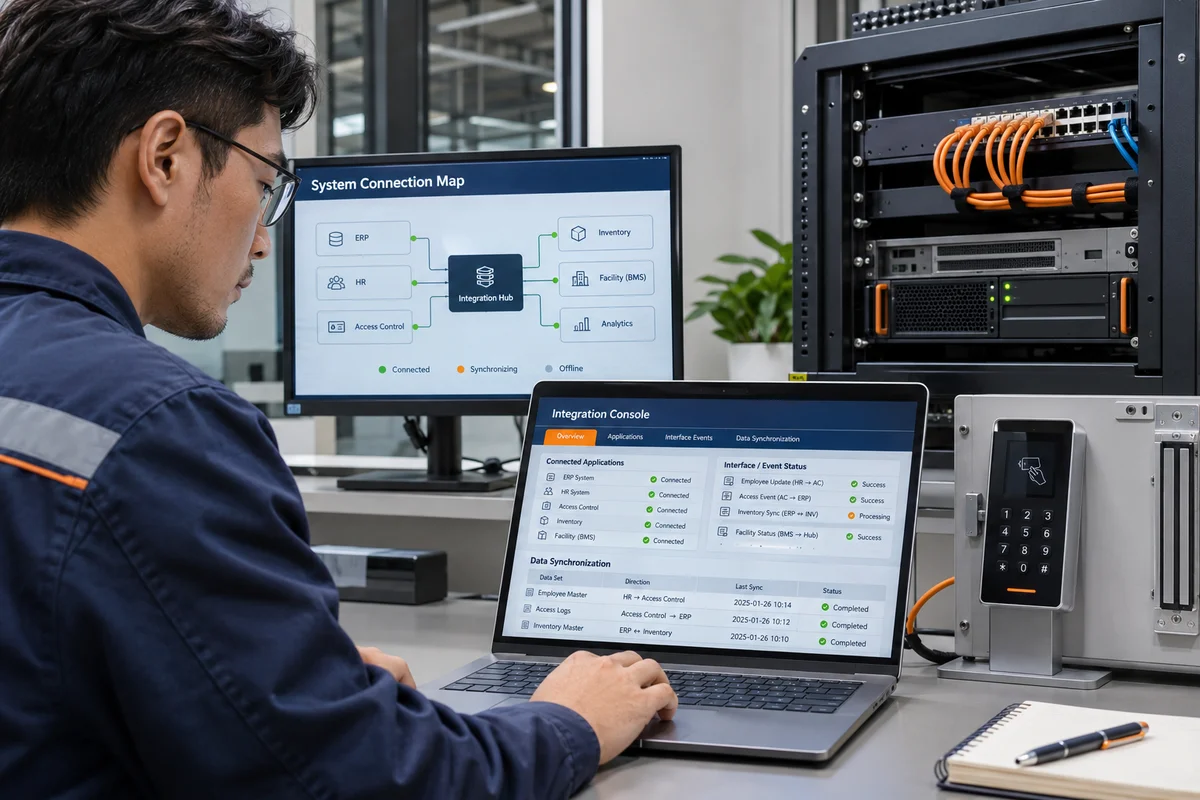
Connect the workflow, not just the endpoints.
An API connection is only one part of an integration. The business also needs to know which system owns the data, what an event means, what happens when a device is offline and how an operator investigates a failure. We build application and hardware connections around those real operating conditions.
Where projects get stuck.
Applications disagree about the same record
Different identifiers, field definitions and update timings create conflicting information. We map ownership, record matching and transformation rules before building the connection.
Events arrive twice, late or not at all
Retries, network interruptions and device behaviour can produce duplicate actions or missing updates. We define how events are identified, acknowledged, retried and reconciled.
A connection exists but nobody can diagnose it
A background process may appear healthy while a downstream system has rejected records. We plan useful status, event history and error information alongside the data exchange.
What we connect and make visible.
Application APIs and middleware
Build the agreed data exchange between business applications, databases and external platforms. Define the contract, record mappings, credentials and expected responses.
Hardware and platform events
Connect supported controllers, readers, security platforms and device events to the application workflow. Review the actual vendor interfaces, versions and access requirements first.
Identity and access integration
Scope directory and single sign-on connections where required. Map users, roles and access expectations so authentication and application permissions work together.
Recovery and operational visibility
Implement agreed retry, duplicate-handling and reconciliation behaviour. Provide logs or operational views that help your team identify where an exchange failed and what needs attention.
An access event needs to show the right owner and vehicle information.
- Starting point
- A barrier system records a passage, while the owner and vehicle information lives in another application. Operators must search separately to understand who is arriving.
- Our approach
- We map the passage event to the relevant vehicle identifier and owner record, agree lookup and exception behaviour, then build and test the display workflow against the available access-system interface.
- What improves
- The event can be reviewed in its business context. Missing matches and connection problems have a defined handling path rather than forcing operators to guess.
Work that informs our approach.
We integrated several security platforms and Active Directory SSO for the MAHB PSIM project with Eleware Technology. For Kementerian Ekonomi, we connected EntryPass and face readers. For TM Nxera, we brought HID AMICO and AMAG Symmetry into one enrolment workflow.
How we deliver the work.
- 01
Map the integration boundary
Inventory systems, interface versions, record owners, sample payloads and the business action each exchange should trigger.
- 02
Design the normal and exception paths
Agree mappings, authentication, event identity, timing, failure handling and what operators need to see.
- 03
Build and test the connections
Exercise successful exchanges, duplicate events, unavailable dependencies, invalid records and recovery after interruption.
- 04
Commission and hand over
Validate with the delivery team in the intended environment and document dependencies, configuration and support procedures.
What you receive.
- Interface and data-flow design for the agreed scope
- Implemented connectors or middleware
- Normal, exception and recovery test results
- Configuration, logging and operational handover notes
What helps us scope it.
- System names, versions and available API/SDK documentation
- Access permissions, vendor contacts and test environments
- Representative records/events and their business meaning
- Required timing, ownership and failure-handling expectations
Questions about this service.
Can you integrate a legacy system without replacing it?
We first inspect the available interfaces and permitted access. An API, SDK, supported export or other agreed integration route may be possible; the approach depends on the actual system and its ownership constraints.
How do you handle unreliable connectivity?
We define the required behaviour with you: retries, queued work, reconciliation, alerts or an operator action. The important part is agreeing what can be repeated safely and how missing information is identified.
Does an integration require vendor involvement?
Often it does. Interface access, licensing, credentials, firmware or platform configuration may need the system owner or vendor. We identify those dependencies during discovery.